reviewed by Leonard Rifas
Cherian George and Sonny Liew. Red
Lines: Political Cartoons and the Struggle Against Censorship. MIT Press,
2021. $34.95. ISBN: 97802625430
19 https://mitpress.mit.edu/books/red-lines
Red
Lines surveys “21st century
restrictions on freedom of expression as experienced by political cartoonists
around the world.” The most dramatic cases are of cartoonists who have been
assassinated; abducted and presumed killed; arrested and died in custody;
assaulted; jailed; threatened; sued; fired; or were forced into exile. In
addition to presenting their stories, the authors describe the very ordinary,
market-based pressures which result in dissenting cartoons playing a much
smaller role than they could in the liberal democracies of the West.
The
co-authors briefly include their own backgrounds. Cherian George had served for
a few years in the 1990s as art and photo editor of the largest newspaper in
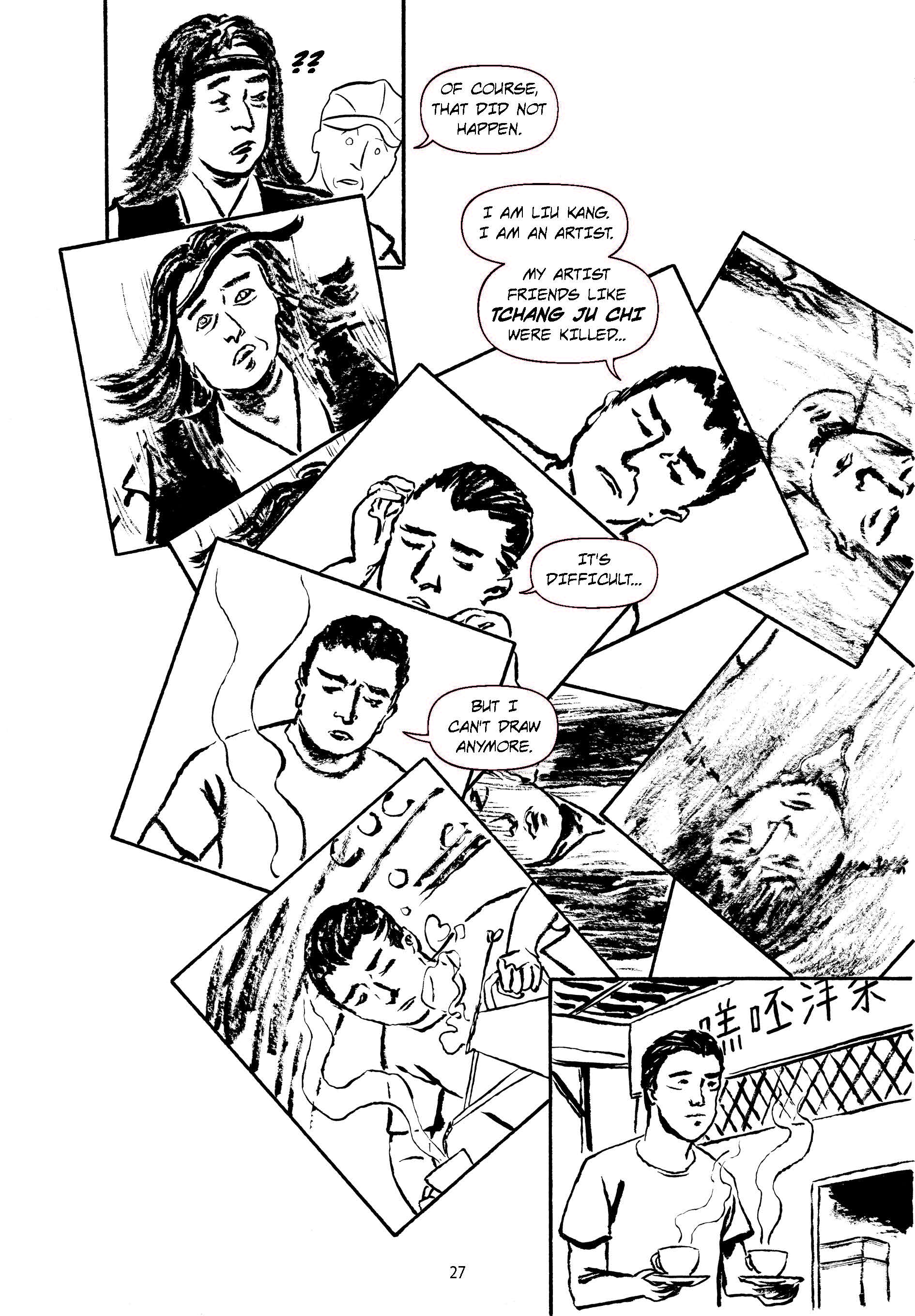
Singapore, and Sonny Liew created a rightly-celebrated graphic novel about
Singapore’s history. Unlike other nations with strong economies, Singapore
lacks press freedom. Liew was responsible for the “scrappy,” very visual
treatment of the text, and also contributed portraits of several of the
cartoonists.
Their
book’s scope is truly global, with examples from more than sixty nations. They
thank such people as the supremely well-connected John Lent, the activist organization
Cartoonists Rights Network International, Daryl Cagle, and others for their
help in making this possible. For Red Lines, they interviewed over five
dozen cartoonists from six continents, and they cite scholarly material from
over 200 published sources (all in English.)
The
idea of a “political cartoon” has no clear boundaries. For this project, George
and Liew define “political cartooning” quickly and simply as “drawn commentary
on current affairs.” They also include some examples from “the associated arts
of caricature, comic strips, memes, and graphic novels.” Although clearly
tangential to the kind of work that they love, the co-authors admit that memes
have become “the most prevalent genre of political cartooning today” and credit
memes for introducing a more participatory and engaging way of distributing
messages (though through a medium, the internet, which has the potential to
become the most fully regulated space ever known.)
The
political cartoons that seem closest to the heart of their project could be
described more narrowly as single-panel, satirical drawings, published for a
mass audience in a newspaper or magazine or posted on the web, which denounce a
leader’s wrongdoing and for which the cartoonists paid a penalty. Even using
this more restrictive definition, one book could not include every 21st
century cartoonist who has encountered serious limits to their artistic
freedom.
Red
Lines’ chapter on “The Boys’ Club” notes
that “Traditional studies of censorship didn’t explore the gender dimension.”
Ironically, even in studies of how various voices have been silenced, those
“silences resulting from sexual discrimination were often ignored.” Once the
issue has been raised, it becomes evident that “gender-based censorship” exists
“everywhere” and that gender-based hierarchy and oppression rely on this.
Red
Lines discusses several extreme examples
of gender-based censorship, including the persecution of Iranian cartoonist
Atena Farghadani. Her cartoon mocking legislators who had passed a sexist law
led to Farghadani receiving a prison sentence of 12 years. (She served two
years before being released because of international pressure.) In the United
States, some women cartoonists are silenced by the more everyday means of
online harassment, which can create what Anita Sarkeesian calls an environment
“too toxic and hostile to endure.”
The
focus on 21st century examples keeps the book feeling current and
fresh, but the authors also include some well-chosen historical examples for
context, particularly in their chapter on racist cartoons. As George and Liew
acknowledge, in the battles to promote full rights and respect for the dignity
of all groups of people, some cartoonists have taken one side in these
conflicts while some cartoonists have worked on the other opposing side.
In
addition to the brutal older methods of state repression and the quieter and
more effective methods of economic strangulation, increasingly the pressure on
cartoonists comes from mob action, either in person or, more commonly, on the
web. Internet responses to provocative cartoons can serve positive ends. George
and Liew credit such criticism for sometimes helping cartoonists learn to avoid
committing unintended offenses with lazy stereotypes, and for contributing to
the evolution of society.
Not
all complaints, though, are well-founded or made in good faith. Sometimes
political entrepreneurs strategically take offense, manufacture outrage and
perform victimhood to advance a political cause. Cartoonists are sometimes
caught in the crossfire of “proxy battles” in larger cultural wars. The
rhetoric of “victimhood” has been used both by discriminated-against minorities
and by majoritarian nationalists. Red Lines advises cartoonists to learn
to tell the difference “between surrendering to a mob and adapting one’s work
in solidarity with the oppressed.” The simple rule of “punching up and not
kicking down,” though, becomes complicated partly because people disagree on
which direction is up. For example, Red Lines asks: “Are cartoons about
Muslims and terrorism punching up at a global movement of extremists […] or
kicking down at marginalized Muslim minorities in the West?”
The
long, penultimate chapter focuses on the massacre of the Charlie Hebdo
cartoonists in Paris in 2015. The chapter (while, of course, never condoning
the crime) analyzes the offending cartoons from multiple perspectives, and then
rather than surrendering to “the Rashomon effect,” intentionally “privileges
the perspective of the cartoonists at the center of the controversy.” By this,
they mean that they trace the previous decade’s most immediately-relevant
events that had led up to their deaths. The book does not simplistically deify
the murdered artists as noble martyrs to high principles. The final word goes
to a surviving Charlie Hebdo cartoonist, “Luz,” who says “The simple
fact is that our friends died.”
Red
Lines’ perspective seems more
multinational than international, emphasizing each cartoonist’s situation
largely within his or her own national context. Several of the nations in which
cartoonists have suffered repression have been targets of the US government’s
ongoing attempts to weaken their regimes or overthrow their leaders, including
Nicaragua, Venezuela, Syria, Cuba, China, and Iran. Nothing brings out the
censors like a state of war, and, it would have been appropriate to add, this
also applies in nations bedeviled by the CIA’s undeclared wars and the US
Treasury Department’s sanctions. (Possibly no recent study has been
written that focuses directly on the historic roles of editorial cartooning in
international propaganda campaigns, psychological warfare operations, and
destabilization efforts.)
Given
recent developments (with most jobs for professional, full-time staff
cartoonists still disappearing rapidly), when the authors struggle to end on a
hopeful note, they conclude simply that cartooning will not die. Political
cartoonists who follow current affairs closely, demonstrate artistic skill, and
seek to contribute to civic engagement will continue to struggle onward.
Students and others who wish to support those struggles can find in this
attractive volume a welcome, wide-ranging and nuanced introduction to the issue
of cartoon censorship.
A version of this review will appear in print in IJOCA 24-1.